06 — Brand Positioning
Brand positioning that makesthe choice obvious
Most businesses do not have a visibility problem first — they have a clarity problem. If a prospect cannot say what you do and who it is for after ten seconds on your site, more traffic will not fix it.
- Timeline
- Scoped to interview count and asset coverage
- Starts with
- Customer and sales-team interviews
- You get
- Positioning, messaging, identity, guidelines
- Pairs with
- A site or campaign that applies it immediately
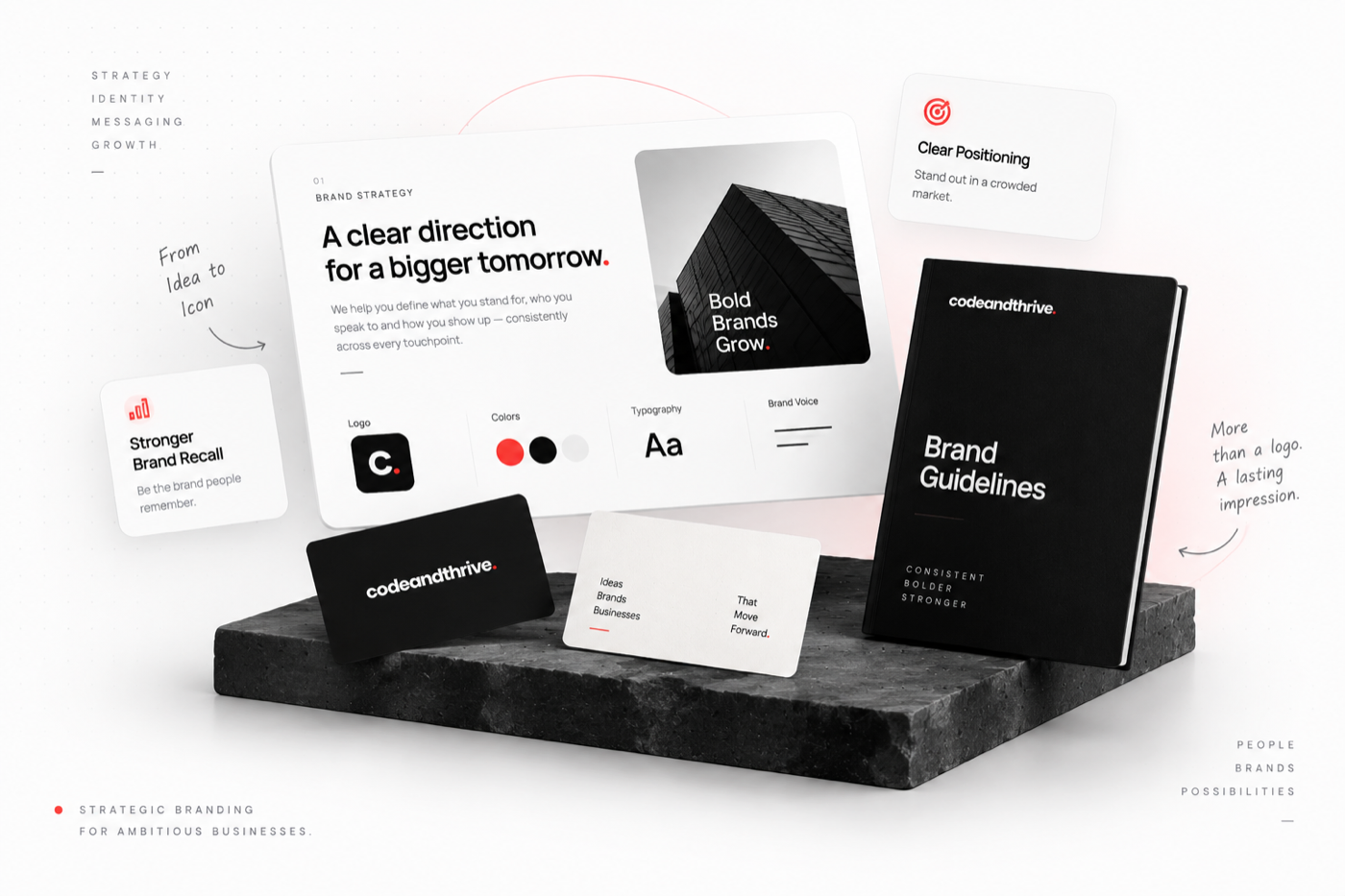
What's included
Brand Positioning,
specifically.
Brand strategy
Who you are for, what you are against, and the claim only you can credibly make.
Messaging framework
Value proposition, proof points and objection handling written once and used everywhere.
Digital identity
Type, colour, motion and imagery built for screens and for the people applying them.
Market positioning
An honest read of the competitive set and a defensible place to stand within it.
Creative direction
Art direction for campaigns, product and site so the work looks like one company made it.
Guidelines that get used
Short, practical rules with real examples, not a 90-page document nobody opens.
Outcomes
What you actually
end up with.
Deliverables are easy to list. These are the differences you should be able to point at afterwards.
- A sentence your whole team uses to describe what you do
- Sales material that stops re-explaining the basics
- A visual system that survives contact with real content
- Consistency across site, ads, decks and product
FAQs
Before you ask,
the honest answers.
The questions we get most often about brand positioning — answered the way we would answer them on a call.
Positioning is the decision about who you serve and why you are the obvious choice for them. Identity — logo included — is the expression of that decision. Doing the expression first is why so many rebrands change nothing commercially.
Frequently. Many businesses have a serviceable identity and a messaging problem. In that case we sharpen the positioning and copy, keep the marks, and apply it across the site and sales material.
By interviewing your customers and your sales team before writing anything. The specific, useful language almost always already exists in how customers describe the problem — it just has not made it onto the website.
A positioning statement, a messaging framework with proof points, the digital identity assets, and short applied guidelines. Practically: everything needed to rewrite a site or launch a campaign without a second discovery phase.
Start a project
Ready to talk about
brand positioning?
Tell us the problem, the deadline and roughly what you have to spend. You'll get an honest read on fit before anyone books a call.